Building Cleaner, Safer Infrastructure: The Environmental Side of Abuja's New Kuje/Wumba/Lokogoma Substations
Focus: Environmental & Safety Perspective | Kuje/Wumba/Lokogoma, FCT Abuja | 5km 132kV Underground XLPE | Oil Containment + Fire Safety | TCN June 2022
High-voltage substations are rarely thought of as environmental projects. But the design choices made at Kuje and Wumba/Lokogoma show how grid infrastructure can reduce its footprint and support a cleaner energy future.
Substations are the unglamorous workhorses of the power system. They do not generate electricity, yet way they are designed and built has real environmental and safety consequences. The Kuje/Wumba/Lokogoma Substations Project, delivered by ICC for Transmission Company of Nigeria and certified complete in June 2022, offers useful case study.
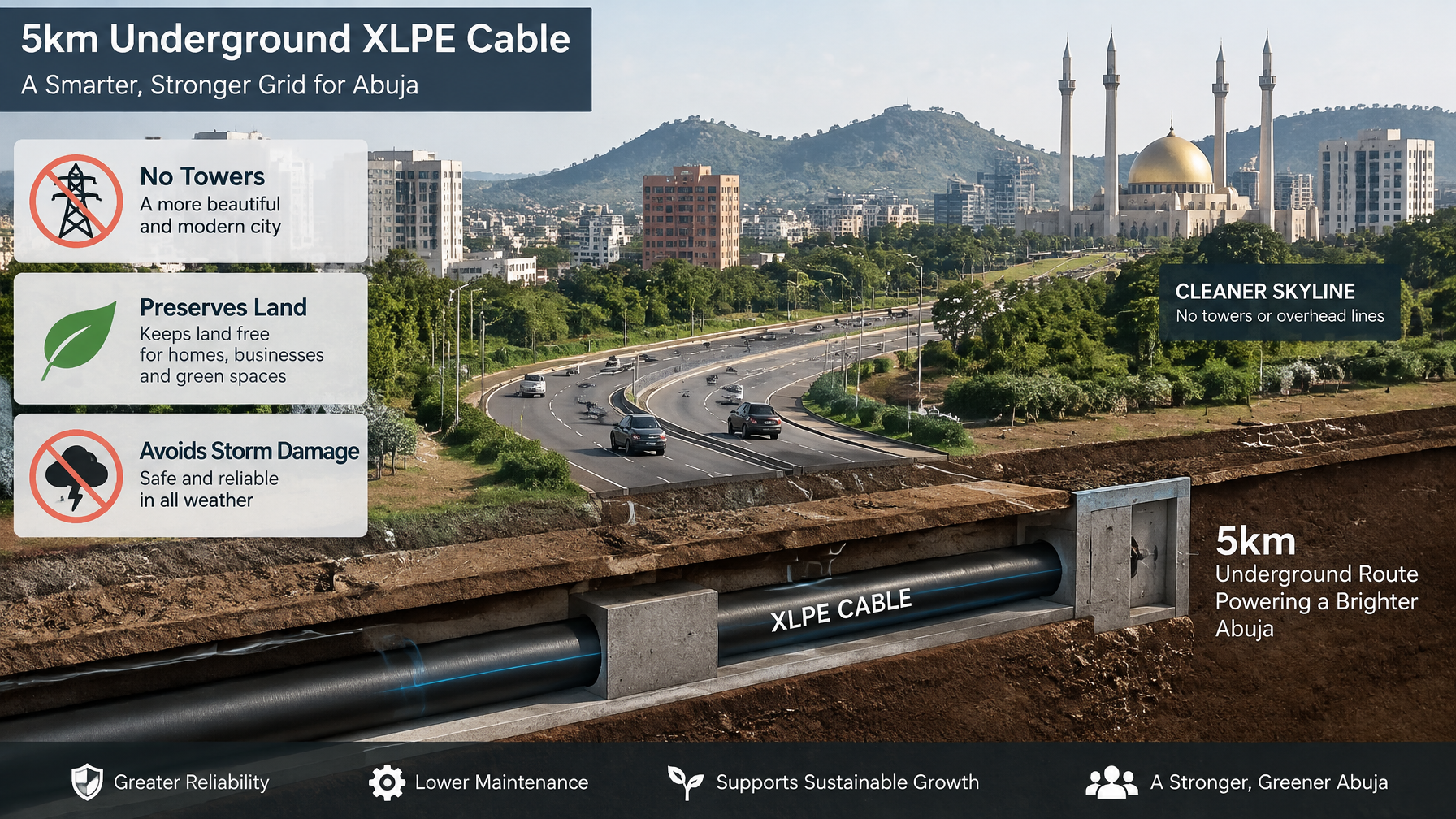
Going Underground: 5km of 132kV XLPE Cable
One of project's most significant environmental features is approximately 5 km of 132kV underground XLPE cable connecting New Apo Substation to new Wumba/Lokogoma substation. Overhead lines require wide cleared corridors, tall steel towers and permanent land-use restrictions beneath them. In a developing urban area, underground avoids those impacts — preserves land, removes visual intrusion, and reduces exposure to storm and vegetation damage.
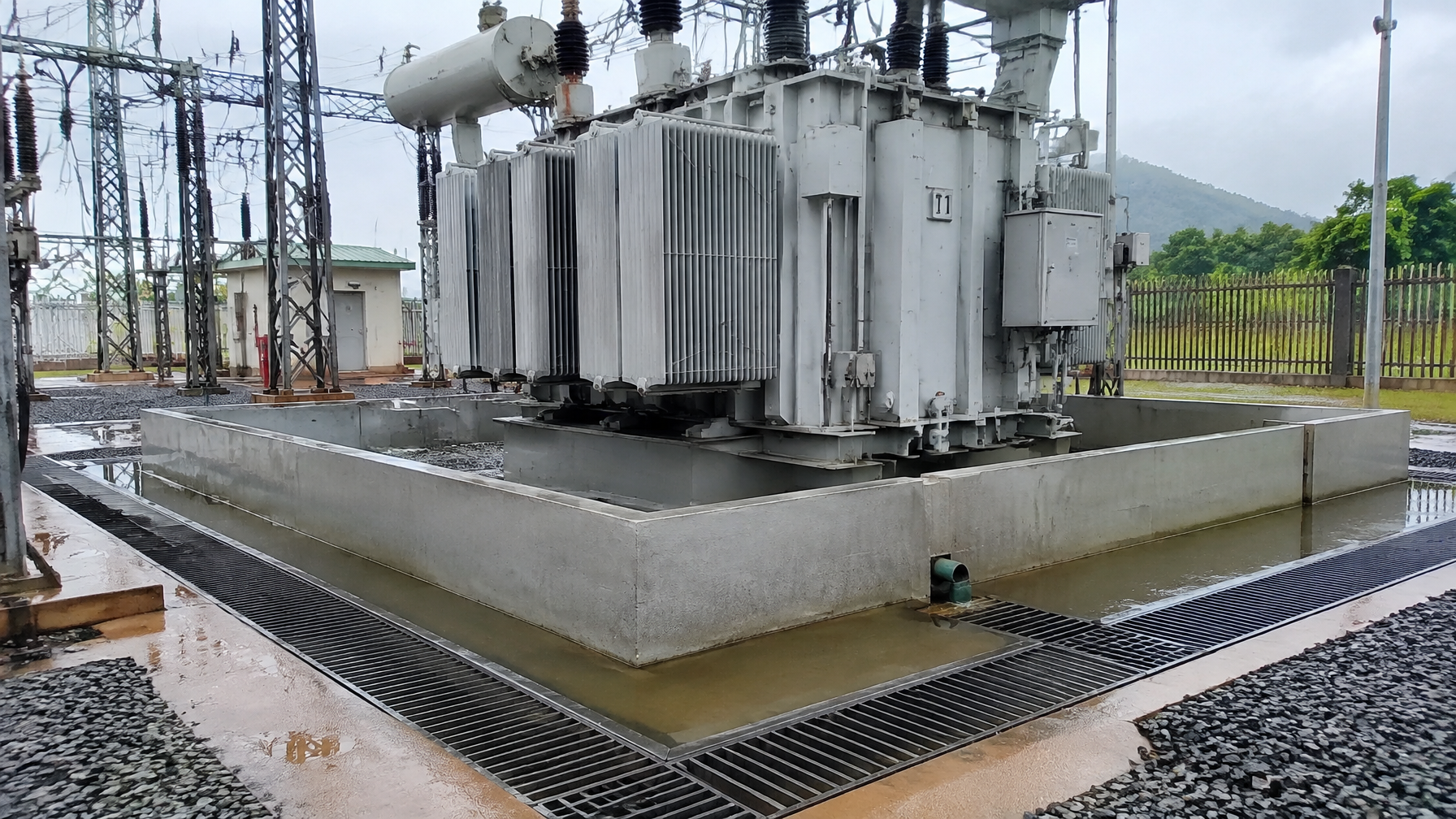
Protecting Soil and Water: Oil Containment Pits & Drainage
Large power transformers contain substantial volumes of insulating oil. If that oil leaks, it can contaminate soil and groundwater. The project included transformer foundations with oil containment pits at both sites, designed to capture leakage and prevent reaching environment — a critical, often invisible, safeguard. Site drainage networks were also built at both substations — good drainage protects equipment, prevents erosion and manages heavy rainfall runoff during Abuja's rainy season.
Fire Safety and Lightning Protection
Control buildings were equipped with fire detection and suppression systems, while earthing and lightning protection systems were installed to protect people and equipment. These reduce risk of fires and electrical accidents that could harm workers, nearby residents and surrounding environment.
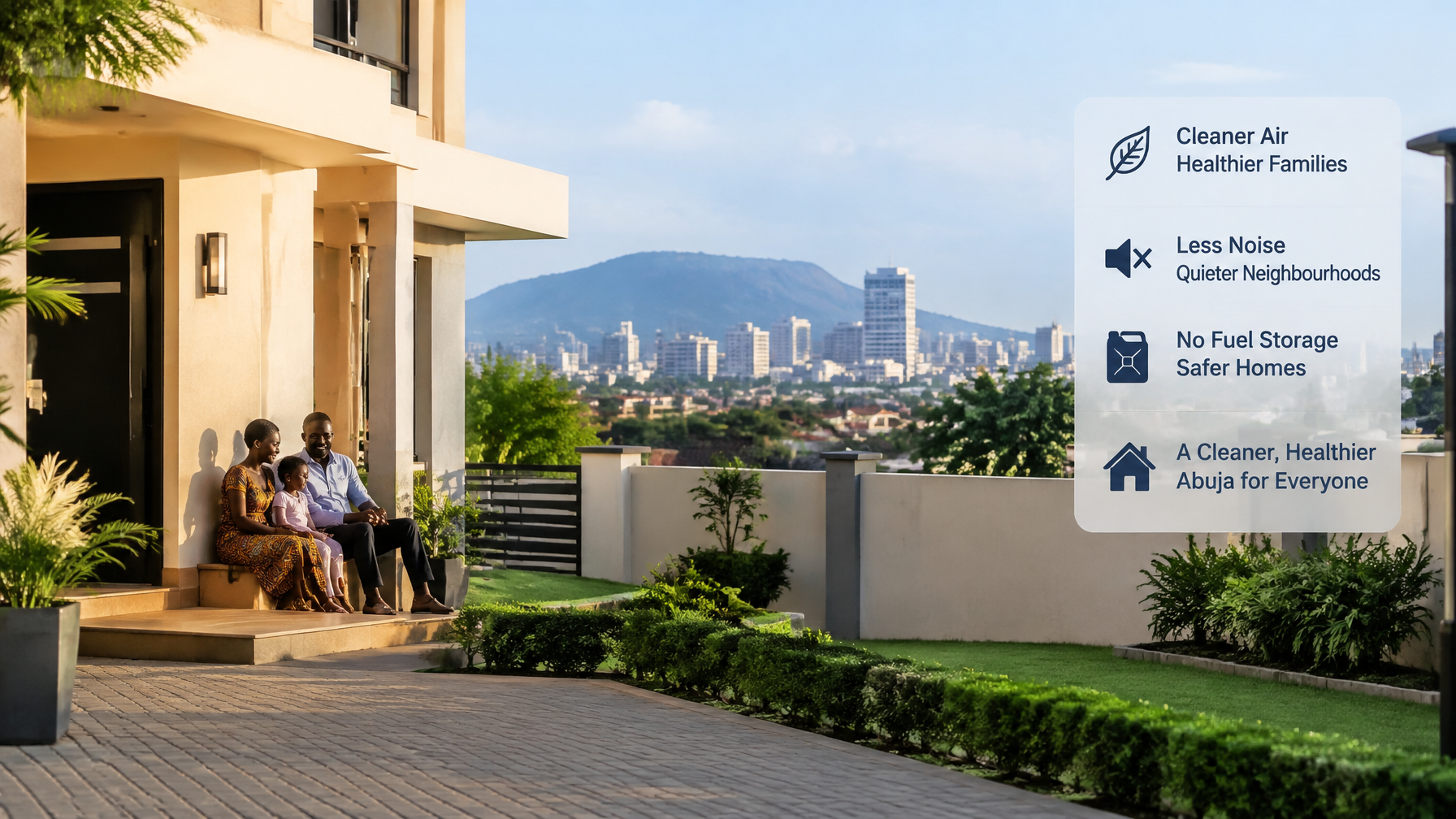
Reducing Waste in the System & Fewer Generators, Cleaner Air
A stronger transmission network is also more efficient. When substations are overloaded or far from demand, energy is lost as heat and supply quality suffers. Adding new transformation capacity closer to growing load centres helps reduce inefficiencies, so more electricity generated actually reaches consumers.
Perhaps greatest environmental benefit is indirect: where grid supply is weak, households and businesses rely on petrol/diesel generators — among most polluting sources (exhaust at street level, constant noise, fuel transport/storage in residential areas). By improving capacity and reliability in Kuje, Lokogoma and Wumba, project helps reduce need for these generators, with benefits for air quality, noise and public health.
Ready for a Cleaner Grid & Responsible Footprint
Nigeria's Energy Transition Plan anticipates major expansion of renewable energy. Much clean power will need strong transmission to reach consumers. Modern substations with SCADA integration, advanced protection and adequate capacity are foundation for that transition — a grid that cannot carry power cannot carry clean power either.
Like all infrastructure, substations use land and require long-term maintenance, including careful management of transformer oil over lifetime. But Kuje and Wumba/Lokogoma show thoughtful design, from underground cabling to oil containment and fire protection, can significantly reduce environmental risk while strengthening system that powers capital.
Environmental & Safety At-A-Glance
| Feature | Details |
|---|---|
| Underground Cable | 5km 132kV XLPE New Apo → Wumba/Lokogoma — no towers, no wide corridor, less storm/vegetation exposure |
| Oil Protection | Transformer foundations with oil containment pits at both sites + drainage networks |
| Safety | Fire detection/suppression + earthing/lightning protection in control buildings |
| Efficiency Gain | New capacity closer to load reduces heat losses — more generated power reaches users |
| Indirect Benefit | Fewer petrol/diesel generators — cleaner air, less noise, better public health |
Frequently Asked Questions
Q: Why go underground instead of overhead?
Avoids wide cleared corridors and towers in dense urban area — preserves land, visual amenity and reduces storm damage.
Q: How is soil/water protected?
Oil containment pits under transformers capture any leakage before it reaches soil/groundwater.
Q: How does a substation help the environment?
Indirectly — stronger grid means fewer polluting generators at homes/businesses, and enables future large solar to be carried.
Based on TCN certificate of completion 24 June 2022 for Kuje/Wumba/Lokogoma. Consult tcn.org.ng.

Comments
Post a Comment